What Is a Glass Insulator 120B and Where Is It Used?
Glass Insulator 120b is a high-voltage suspension insulator used to support conductors and limit current leakage. Its glass body combines mechanical strength, electrical resistance, and visible damage detection. When a glass disc fails, its shell usually shatters, giving maintenance crews a clear warning from the ground.
The designation commonly relates to a 120-kilonewton mechanical rating under ANSI C29.2 classifications. Exact dimensions and electrical values still depend on the manufacturer and applicable standard. IEC 60305 also evaluates suspension insulators through mechanical, electrical, and environmental tests. These details matter in transmission corridors, substations, railway electrification, and coastal networks. Salt, dust, rain, and temperature changes can quietly reduce performance.
The International Energy Agency reported in Electricity Grids and Secure Energy Transitions that global grid investment must exceed 600 billion dollars annually by 2030. That pressure makes dependable components more important. MarketsandMarkets also identifies aging infrastructure and renewable-energy expansion as major drivers for the insulator market.
Dr. M. S. Naidu, a recognized high-voltage engineering author, states, “The function of an insulator is to support the conductor and prevent current from flowing to earth.” His sentence remains practical. Yet, the label Glass Insulator 120b alone does not prove suitability. Engineers must check creepage distance, lightning impulse strength, pollution level, hardware compatibility, and local standards. A catalog number can simplify selection, but it can also hide important differences. Careful inspection remains essential, especially where cracked glass, loose fittings, or unexpected contamination appear.
Definition and Key Characteristics of a Glass Insulator 120B
A glass insulator 120B is generally a high-voltage disc insulator used on overhead transmission lines. The “120” commonly refers to a mechanical strength class, while “B” identifies a particular design or dimensional variant. However, these markings can differ between standards and technical catalogs. Always check the manufacturer’s drawing and applicable standard.
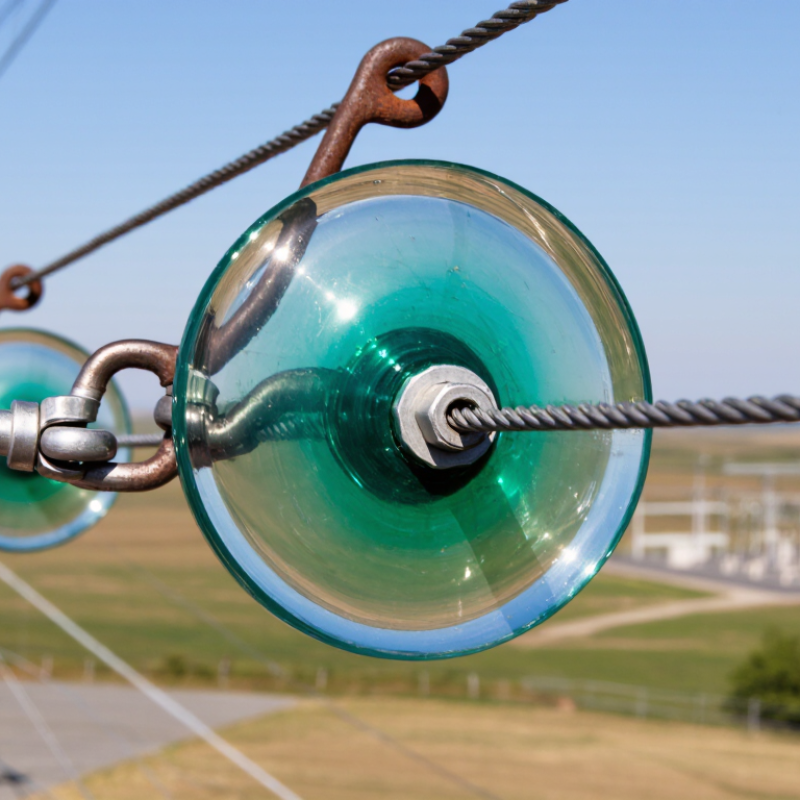
Its body is made from toughened glass, with a metal cap and pin secured by cement. The glass surface is smooth and easy to inspect. Small cracks, chips, or cloudy areas may indicate damage. Its wide sheds increase the leakage distance between the energized conductor and the tower. This helps control current flow across wet or contaminated surfaces. The transparent body also makes visual inspection practical from the ground, although binocular checks are not enough for critical assessments.
In service, 120B insulators may support conductors on transmission towers, especially where reliable mechanical strength and weather resistance matter. Their performance depends on correct spacing, clean hardware, and suitable pollution design. Salt, dust, industrial deposits, and bird residue can reduce insulation performance. I would not treat the number alone as proof of electrical capacity. Voltage rating, creepage distance, impulse withstand, and hardware arrangement must be verified together. Field conditions often expose weaknesses that catalog figures overlook.
How the Glass Insulator 120B Performs on Power Lines
What Is a Glass Insulator 120B and Where Is It Used?
How the Glass Insulator 120B Performs on Power Lines
A Glass Insulator 120B usually refers to a toughened-glass suspension unit for medium- and high-voltage lines. The “120” commonly indicates a 120 kN mechanical rating, while “B” identifies a standardized design family. Exact dimensions vary by manufacturer and national specification. Engineers should verify the certified datasheet, not rely on the name alone.
On power lines, the insulator supports the conductor and separates it from the steel tower. Its glass body offers high visibility during inspection. Internal cracks can create a noticeable visual fault. That helps maintenance teams locate damaged units quickly. IEC 60383-1 type tests evaluate mechanical, electrical, and thermal performance. Field reliability still depends on contamination, moisture, lightning, and installation quality. Salt deposits can reduce surface resistance. A clean unit may perform well, yet coastal pollution changes the risk sharply.
The International Energy Agency reported in Electricity Grids and Secure Energy Transitions that 80 million kilometres of grids may need new construction or refurbishment by 2040. That expansion increases demand for dependable line hardware. Still, the 120B is not a universal solution. Line voltage, pollution level, creepage distance, and safety clearances must match the project design.
Tips: Inspect glass discs after storms, check hardware torque, and record contamination patterns. Confirm the 120 kN rating against the actual string design. Small errors matter. A laboratory result cannot fully represent every aging power line.
Common Applications and Installation Environments
A Glass Insulator 120B is generally a high-voltage glass insulator identified by a specific design or performance class. The exact meaning of “120B” can vary between technical standards, so engineers should verify its dimensions, mechanical strength, and electrical rating before installation. Its toughened glass body provides visible damage evidence, since serious internal failure often leaves cracks or shattered sections.
The most common application is overhead power distribution and transmission. It may support conductors on poles, steel structures, or crossarms, keeping energized wires separated from grounded hardware. Installation teams also use similar glass insulators in substations, where busbars and connection points need reliable electrical clearance. Correct hardware alignment matters. A tilted fitting can increase mechanical stress and encourage uneven contamination.
These insulators perform in open rural corridors, forest edges, and urban networks. Coastal installations require attention to salt deposits, while industrial areas may expose surfaces to dust, smoke, or chemical residue. Cold regions add ice and wind loading. Wet weather can reduce surface insulation when pollutants form a conductive film. Regular visual checks should examine chips, broken skirts, loose fittings, and unusual discharge marks. Field conditions are rarely tidy. Even a suitable 120B insulator can underperform if the creepage distance, conductor tension, or mounting angle is poorly assessed. Clearance calculations should match the system voltage and local installation rules.
What Is a Glass Insulator 120B and Where Is It Used?
A 120B glass insulator is a high-strength suspension insulator unit commonly specified with a nominal mechanical failing load of 120 kN. The chart shows representative numbers of units used in suspension strings across common high-voltage transmission levels.
Typical applications include overhead transmission lines, substations, and exposed outdoor environments. Actual string length depends on insulation coordination, pollution severity, altitude, creepage distance, conductor arrangement, and local electrical standards.
Benefits, Limitations, and Maintenance Considerations
A Glass Insulator 120B usually refers to a toughened-glass suspension unit with a 120 kN mechanical rating. The “B” commonly identifies its coupling configuration. It is used on overhead transmission lines, especially at substations and high-voltage towers. IEC 60383-1:2023 defines key mechanical, electrical, and type-test requirements for this insulator family. CIGRE technical reports also emphasize pollution, moisture, and hardware condition as major outdoor-insulation risks.
Its main benefit is visible damage. A broken glass disc often shatters, making field inspection faster than checking hidden defects. Glass also resists ultraviolet exposure and does not absorb water. However, it is not a perfect choice. Sudden impact can create breakage, while salt, dust, and industrial deposits may reduce surface performance. A clean-looking string can still experience leakage current during fog or rain. CIGRE guidance repeatedly links contamination severity with flashover risk, so installation data matters more than catalogue ratings alone.
Tips: Inspect pins, caps, and locking devices during every patrol. Look for missing glass, corrosion, loose fittings, and unusual discharge marks. Wash polluted strings according to the utility’s safety procedure. Record weather, contamination, and defect locations. Do not replace only the visible disc without checking adjacent hardware. In practice, maintenance teams sometimes focus too much on the glass itself. That assumption deserves review. A strong 120B unit can still fail as part of a poorly maintained assembly.