Choosing China’s best CTV 255 glass insulators requires more than comparing prices or catalog photographs. Grid reliability depends on verified design, manufacturing control, and correct application data. The International Energy Agency’s Electricity Grids and Secure Energy Transitions report estimates that annual global grid investment must rise to more than USD 600 billion by 2030. This expansion increases demand for dependable overhead-line components, including glass suspension and line insulators.
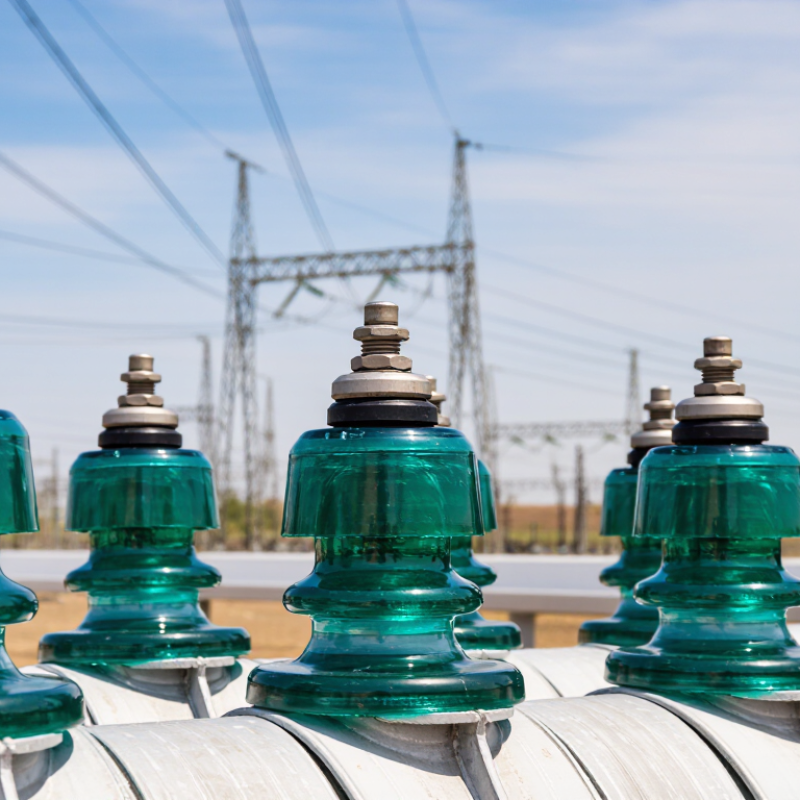
A suitable CTV 255 Isolator En Verre should be assessed against the project’s voltage class, mechanical load, creepage distance, pollution level, and climate conditions. IEC 60383-1 provides important testing principles for overhead-line insulators above 1,000 volts. However, compliance claims should be checked through current test reports, not marketing language. Ask Chinese manufacturers for factory inspection records, routine-test procedures, type-test certificates, and batch traceability. Look closely at the glass surface. It should be uniform, free from visible cracks, and properly finished around the metal fittings.
Small details matter.
The best supplier should also explain galvanizing quality, cementing methods, packing protection, and replacement support. CIGRE technical publications consistently emphasize insulation coordination, pollution performance, and aging management in transmission networks. Still, no single insulator is universally “best.” A model proven in a dry inland corridor may perform poorly near salt spray or industrial dust. I have seen specifications become unclear when buyers rely only on the CTV 255 label. Confirm the exact drawing, standard, electrical ratings, and installation environment before approval. This guide examines those practical criteria and helps buyers compare Chinese manufacturers with greater confidence, discipline, and technical judgment.
How to Choose China Best CTV 255 Glass Insulators?
Understanding CTV 255 glass insulator specifications starts with the designation itself. CTV 255 is not a universal international rating. Always verify the manufacturer’s datasheet and test certificate. Check rated mechanical load, creepage distance, dry arcing distance, and power-frequency withstand voltage. These values must match the line voltage, pollution level, altitude, and conductor tension. IEC 60305 covers cap-and-pin glass insulators, while IEC 60120 defines coupling dimensions. Compatibility matters.
Field experience shows that glass insulators need more than a high strength number. Inspect the cement interface, metal fittings, zinc sleeve, and glass surface finish. A damaged edge can become a weak point during transport or switching surges. For coastal or industrial sites, longer creepage distance can reduce flashover risk. Regular washing may still be necessary. Conditions are never perfectly predictable.
The IEA’s Electricity Grids and Secure Energy Transitions report estimates that existing global grids may require about 80 million kilometers of new or upgraded lines by 2040. IRENA reported 473 GW of renewable capacity additions in 2023. These projects increase demand for reliable overhead transmission hardware. CTV 255 units may suit selected medium- or high-voltage string applications, but the exact use depends on verified electrical and mechanical data. Do not choose by price alone. A laboratory report is useful, but site-specific validation remains essential.

Choosing a China-made CTV 255 glass insulator starts with performance, not appearance. Confirm whether “255” means a 255 kN specified mechanical load. Request drawings, material specifications, and routine-test records. IEC 60305 covers mechanical, electrical, and thermal-mechanical tests for glass and ceramic insulator units. The supplier’s certificate should match the exact design, not a similar catalogue model.
Pollution performance needs equal attention. IEC 60815-1 divides service environments into five site pollution severity classes, from very light to very heavy. CIGRE Technical Brochure 555 recommends evaluating equivalent salt deposit density and non-soluble deposit density before selecting insulation distance. Inspect the glass surface, cement connection, and galvanized hardware under clear lighting. Small chips matter.
Ask for type-test evidence from an independent laboratory. Verify power-frequency withstand, lightning impulse withstand, and mechanical failing load. Factory experience helps, but paperwork is not enough. I would also compare batch traceability, sampling frequency, and breakage records over several production lots. One overlooked point is transport damage. A perfect test report cannot repair a cracked glass shell. Supplier claims may sound precise, yet site conditions can expose weak assumptions. Check the actual altitude, wind load, conductor weight, and maintenance access before approving the CTV 255 design.
The chart presents engineering screening benchmarks for a 252 kV class glass-insulator application. The 255 kN value represents the rated mechanical failing-load designation, while the 460 kV power-frequency withstand level and 1,050 kV lightning-impulse withstand level are commonly used insulation-coordination values for this voltage class. The 6,300 mm creepage distance is calculated from a 25 mm/kV heavy-pollution design starting point. Confirm the final values against the project specification, pollution severity, altitude, and applicable IEC requirements before purchasing.
Reference framework: IEC 60305, IEC 60071-1, and IEC 60815. The figures are generic technical benchmarks and do not represent any manufacturer or brand.
Choosing China’s best CTV 255 glass insulator requires more than comparing prices. Material consistency matters first. Toughened soda-lime glass should show uniform transparency, controlled thermal treatment, and no visible stones, bubbles, or hairline cracks. Cement, metal fittings, and protective coatings also need compatible expansion behavior. Small defects can become serious after years of rain, ice, and electrical stress.
Manufacturing evidence is more useful than attractive brochures. Ask for batch records, heat-treatment curves, mechanical failing-load results, and traceability from glass disc to final assembly. IEC 60383-1 covers tests for overhead-line insulators, including mechanical and electrical performance. IEC 60120 helps verify coupling dimensions. A reliable factory should provide routine-test records, type-test reports, and independent laboratory certificates. Factory ISO 9001 certification is helpful, but it does not replace product testing. That distinction is often missed.
Grid reliability is becoming more demanding. The International Energy Agency’s Electricity Grids and Secure Energy Transitions report estimates that more than 80 million kilometres of grids may need addition or refurbishment by 2040. It also projects annual grid investment above 600 billion dollars by 2030. These figures increase the value of durable, traceable components. Still, certification alone is not enough. Check the exact CTV 255 drawing, rated mechanical load, creepage distance, and operating environment. Product codes may vary between suppliers. One overlooked suffix can change the specification.
| Evaluation Dimension | Recommended Requirement for a CTV 255 Glass Insulator | What to Verify with the Manufacturer | Relevant Standard or Reference | Selection Priority |
|---|---|---|---|---|
| Insulating Material | Toughened electrical-insulator glass with a consistent, controlled composition. | Request the glass type, chemical composition control procedure, raw-material inspection records, and product technical datasheet. | IEC 60305 and IEC 60383-1 cover glass and ceramic insulators for overhead lines. | Essential |
| Glass Toughening | Uniform thermal toughening that provides mechanical strength and safe fragmentation after failure. | Check the toughening process, temperature-control records, residual-stress control, and documented fragmentation inspection. | Confirm compliance with the applicable product standard and the approved type-test procedure. | Essential |
| Surface Condition | Smooth, clean glass with no cracks, chips, visible devitrification, sharp edges, or unacceptable surface defects. | Review incoming and final visual-inspection criteria, sampling plans, defect photographs, and rejection records. | IEC 60383-1 provides test and inspection requirements for overhead-line insulators. | Essential |
| Metal Hardware | Hot-dip galvanized or otherwise suitably protected cap, pin, and fittings with compatible geometry and corrosion protection. | Verify steel grade, galvanizing method, coating inspection, dimensional drawings, and compatibility between glass and metal parts. | ISO 1461 is commonly used for hot-dip galvanized coatings on fabricated iron and steel articles; confirm the contract specification. | High |
| Ball-and-Socket Coupling | Correct coupling dimensions, secure locking, and interchangeability with the specified string-insulator hardware. | Compare coupling dimensions, locking-device design, gauge results, and assembly drawings with the purchaser’s requirements. | IEC 60120 specifies dimensions of ball and socket couplings for string insulator units. | Essential |
| Mechanical Strength | The specified electromechanical or mechanical failing load must match the line-design requirement; do not rely on the model name alone. | Request the declared rating, type-test report, routine-test records, and batch test results. Confirm the loading direction and test method. | IEC 60305 and IEC 60383-1 provide relevant requirements and test methods for cap-and-pin insulators. | Essential |
| Electrical Performance | Specified power-frequency, dry, wet, and impulse withstand levels must be suitable for the system voltage and insulation coordination study. | Check the rated voltage, withstand values, test configuration, atmospheric conditions, and whether values apply to a single unit or an assembled string. | IEC 60305, IEC 60383-1, and IEC 60071-1 are relevant references for insulation coordination and insulator performance. | Essential |
| Creepage Distance | The creepage distance should be selected according to pollution severity, site conditions, and the required specific creepage distance. | Verify the actual creepage measurement, profile drawing, pollution classification, altitude, and environmental conditions of the installation site. | IEC 60815-1 provides guidance for selecting and dimensioning high-voltage insulators for polluted conditions. | Essential |
| Routine Testing | Each production unit should undergo documented routine inspections and applicable mechanical or electrical checks before release. | Ask for routine-test procedures, equipment calibration certificates, inspection frequency, traceability records, and release authorization. | Use the applicable routine-test requirements in IEC 60305 and IEC 60383-1. | Essential |
| Type Testing | A representative design should pass the applicable electrical, mechanical, thermal, and dimensional type tests before mass production. | Confirm that the report identifies the same design, material, coupling, dimensions, and ratings as the offered product. | IEC 60305 and IEC 60383-1 define relevant type-test provisions for glass and ceramic line insulators. | Essential |
| Quality Management | A documented quality-management system with controlled purchasing, production, inspection, nonconformance handling, and corrective action. | Check the validity and scope of the ISO 9001 certificate, internal audit records, process-control plans, and calibration system. | ISO 9001:2015 specifies requirements for quality-management systems. | High |
| Production Traceability | Each batch should be traceable to raw materials, furnace or toughening records, hardware lots, inspection results, and shipment documents. | Request sample identification codes, batch records, inspection reports, and a documented retention period for quality data. | Traceability should be defined in the purchase specification and the manufacturer’s quality-management procedures. | High |
| Dimensional Consistency | The unit should conform to the approved drawing for diameter, height, coupling dimensions, locking arrangement, and creepage profile. | Review dimensional inspection reports, calibrated gauges, approved drawings, and sampling criteria for each production batch. | IEC 60120 and the relevant product standard should be used together with the purchaser’s approved drawing. | High |
| Environmental Suitability | The selected design should be suitable for the site’s pollution, humidity, temperature, wind, altitude, and corrosion conditions. | Provide site data and request a written selection review covering pollution severity, creepage distance, mechanical loading, and corrosion exposure. | IEC 60815-1 and IEC 60071-1 support application-based insulation selection. | Essential |
| Certification Documents | Use certificates and reports that are valid, traceable, within scope, and issued by a competent independent body where required. | Verify certificate number, scope, issue date, laboratory accreditation, product identification, test standard, and report authenticity. | ISO 9001 certification concerns the management system; it does not by itself prove that a specific insulator passed all product tests. | High |
| Pre-Shipment Inspection | Perform documented visual, dimensional, coupling, packaging, and marking inspections before shipment. | Define inspection points, acceptance criteria, sampling level, witness rights, packing requirements, and handling instructions in the purchase order. | Inspection and acceptance criteria should reference the applicable IEC standard and approved technical specification. | High |
| Packaging and Transport | Use moisture-resistant, shock-resistant packaging that prevents glass-to-glass contact and protects metal fittings from damage. | Check packaging drawings, drop or handling provisions, pallet stability, quantity per package, markings, and container-loading photographs. | Packaging requirements should be agreed in the purchase specification and transport plan. | Medium |
| Warranty and Technical Support | Require a clearly defined warranty, replacement process, failure investigation procedure, and technical response time. | Review warranty exclusions, claim evidence requirements, spare-unit policy, root-cause analysis process, and long-term document availability. | Commercial and warranty terms should be stated in the contract; they are not replaced by product certification. | Medium |
Important: “CTV 255” should be matched to the purchaser’s approved technical drawing and declared electrical and mechanical ratings. The model designation alone should not be treated as proof of a particular voltage, load, creepage distance, or certification status.
Choosing China’s best CTV 255 glass insulator requires more than comparing unit prices. Confirm the exact designation, mechanical rating, creepage distance, and applicable IEC requirements. “255” may describe a 255 kN class, but naming conventions can differ. Ask suppliers for certified drawings, routine test records, and type-test reports from qualified laboratories. Data matters.
Supplier evaluation should include glass quality, cement bonding, galvanizing, and batch traceability. Request production samples from the same line used for volume orders. The IEA Electricity 2024 report projects global electricity demand to grow by an average 3.3% annually from 2024 to 2026. This demand increases pressure on grid component supply. A capable Chinese manufacturer should show stable furnace operation, automated inspection, trained quality staff, and documented rejection rates. Ask for evidence.
Customization may involve cap-and-pin dimensions, shed profile, creepage distance, packaging, and corrosion protection. The supplier should confirm mold ownership, tooling lead time, and sample approval procedures. Production capacity must be measured against real output, not factory size. Review monthly capacity, furnace cycles, test-bench availability, and backup arrangements. China’s Electricity Council reported national electricity consumption of about 9.85 trillion kWh in 2024, showing a large domestic grid market. However, large demand does not guarantee consistent quality. I would still audit the facility, check three recent batches, and verify shipment records. Some suppliers may provide excellent samples but weaker mass production. That risk deserves attention.
When comparing China-made CTV 255 glass insulators, pricing should begin with a complete specification, not a headline unit cost. Ask whether the quotation includes hardware, packing, inspection, export documents, and replacement terms. A very low price may signal thinner testing or weaker packaging. That risk is easy to miss. Request a tiered quote for trial quantities and full-project volumes. Start with samples. Also confirm currency, payment milestones, and validity period. In my procurement reviews, unclear assumptions caused more disputes than the quoted price itself. I still question this habit: buyers often compare numbers before comparing technical scope.
Testing deserves written evidence. Ask for routine test records, type-test reports, dimensional checks, visual inspection results, and mechanical load data for the CTV 255 design. The laboratory should identify standards, equipment, dates, and sample numbers. Request photos of markings and packed units. Do not accept certificates without traceable batch information. During factory audits, I check shed condition, glaze consistency, metal fitting alignment, and fracture-control practices. Small surface flaws matter. Yet inspection is not magic; sampling can miss a weak unit, so define acceptance limits before production.
Delivery terms must state manufacturing lead time, loading port, shipping responsibility, insurance, and supplied documents. Clarify how delays, moisture damage, or broken insulators are handled. After-sales support should include a named technical contact, response time, installation guidance, and a documented claim process. Ask for spare-unit recommendations and storage instructions. Keep records. Good support is measurable, not merely promised. A supplier may answer quickly but still provide vague solutions. That is where careful records protect the project.