Leave Your Message

2026 Best Ctv Chain Isolator Types for Global Buyers?

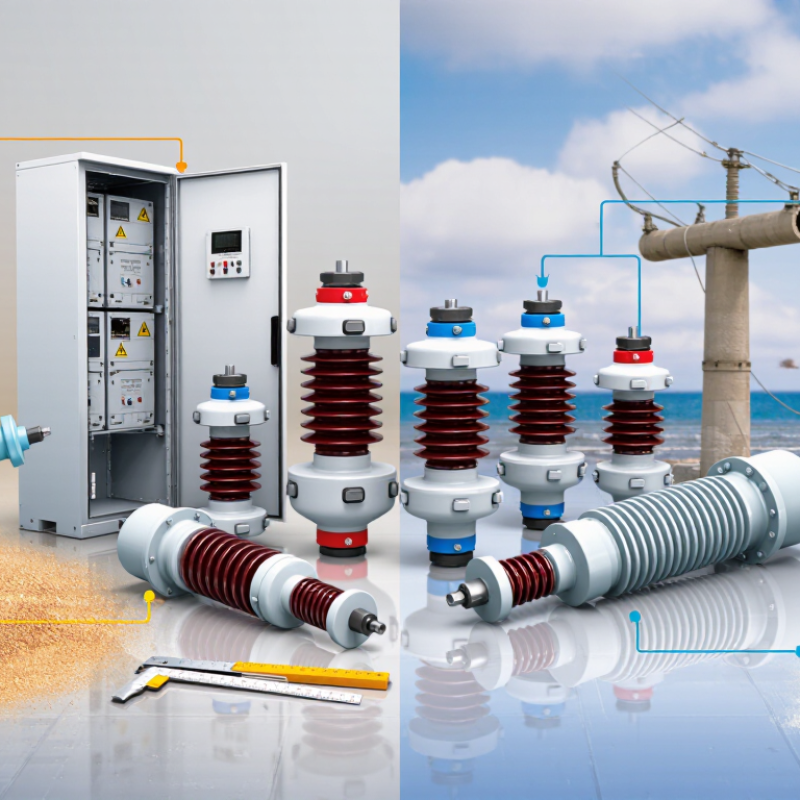
Choosing the right Ctv Chain Isolator in 2026 requires more than comparing prices or product photographs. Global buyers face different voltages, climates, installation methods, and certification expectations. A unit designed for a dry indoor cabinet may perform poorly beside a humid coastal substation. Salt deposits can weaken insulation. Dust can reduce creepage distance. Small details matter.

Dr. John D. Kirtley Jr., a respected power-systems engineer, offers a useful principle: “Safety depends on the complete system, not one impressive component.” That warning fits every Ctv Chain Isolator purchase. Buyers should examine rated voltage, current capacity, insulation level, mechanical strength, operating temperature, and pollution resistance. They should also verify test reports, material specifications, factory quality controls, and documentation for the destination market.

The best type is not always the most expensive. It is the type that matches the chain arrangement, switching frequency, enclosure, and maintenance plan. Ceramic, polymer, and composite designs may behave differently under vibration, rain, ultraviolet exposure, or industrial contamination. Installation clearance matters too. A few missing millimeters can create trouble later.

Real projects are rarely perfect.

Supplier claims still need checking. Product images can hide weak hardware, unclear tolerances, or incomplete certificates. This guide compares leading Ctv Chain Isolator types for global buyers in 2026, while recognizing an uncomfortable truth: selection errors often begin with assumptions, not equipment. Careful specifications, independent verification, and practical field experience remain essential.

2026 Best Ctv Chain Isolator Types for Global Buyers?

What CTV Chain Isolators Are and How They Function

In industrial equipment listings, a CTV chain isolator usually describes a mechanical component that reduces vibration between a moving chain system and its supporting frame. The terminology can vary between suppliers. Therefore, buyers should confirm the drawing, load rating, and installation position before ordering.

A chain isolator works by placing a flexible isolation element between connected metal parts. When the chain starts, stops, or changes speed, the element absorbs part of the shock and limits vibration transfer. Common designs use elastomeric pads, spring elements, or wire-rope assemblies. Each type responds differently to temperature, movement, compression, and repeated loading.

During equipment inspections, I would check alignment, preload, corrosion protection, and fastener condition. Small alignment errors can create uneven chain tension. That may cause noise, wear, or premature failure. A useful specification should include static load, dynamic load, operating temperature, movement range, and tested durability. Ask for material data and performance curves, not only a product photograph. It is not a magic shield. An isolator cannot correct poor lubrication, excessive chain slack, or an overloaded drive. One limitation is often overlooked: softer isolation may reduce vibration but allow greater movement. Global buyers should compare actual operating conditions rather than choosing by size alone.

Main Types of CTV Chain Isolators for Different Applications

Main Types of CTV Chain Isolators for Different Applications

CTV chain isolators help separate cable-support chains from metal structures. They reduce vibration, electrical contact, and corrosion risks. The right type depends on load, moisture, movement, and inspection access.

Polymer isolators suit lightweight cable routing inside dry technical spaces. They resist electrical conduction and simplify installation. Stainless-steel isolators fit exposed decks and saltwater environments. They provide stronger mechanical support but need careful corrosion control. Hybrid isolators combine a metal core with a polymer sleeve. This design works well where high loads and electrical separation exist together. According to the Global Offshore Wind Report 2024, global offshore wind capacity reached about 75 GW by the end of 2023. More offshore vessels now require durable isolation around moving cable systems. IEC 61537 also provides relevant requirements for cable tray and ladder systems.

Tips: Match the isolator to the chain load, bend radius, and operating temperature. Check fasteners after vibration testing. A polymer part may look suitable, yet fail under continuous movement. I would not rely on catalog ratings alone. Salt spray, grit, and poor alignment can change real performance. DNV marine guidance and the manufacturer’s test records should support the final selection. For compact CTV interiors, adjustable isolators can save installation time. For exposed routes, sealed hybrid types usually offer better protection. The ideal choice is application-specific, not simply the strongest option.

2026 Best CTV Chain Isolator Types for Global Buyers

Main Types of CTV Chain Isolators for Different Applications

The chart compares representative nominal system-voltage classes commonly associated with chain-insulator applications. Porcelain and toughened-glass cap-and-pin strings are widely used across distribution, sub-transmission and transmission networks, while composite long-rod isolators are frequently selected where low weight, pollution performance and reduced maintenance are important. Final selection should be verified against applicable IEC standards, insulation coordination, pollution level, mechanical loading and local grid requirements.

Key Materials, Ratings, and Performance Specifications

CTV chain isolators serve demanding overhead transmission systems, where material choice affects safety, maintenance, and service life. Toughened glass offers visible breakage after failure, while porcelain provides stable dielectric performance under heat. Silicone rubber composites reduce weight and improve pollution resistance through hydrophobic surfaces. IEC 60383-1 evaluates suspension and string insulators through mechanical, electrical, and environmental tests. Selection should include rated voltage, lightning impulse withstand, wet power-frequency withstand, and specified mechanical load.

Mechanical ratings need careful interpretation. A 120 kN string may not suit every tower, because wind, conductor tension, ice, and installation angles alter actual loading. The International Energy Agency reported in Electricity Grids and Secure Energy Transitions that over 80 million kilometres of grids may require construction or replacement by 2040. This expansion increases demand for standardized, traceable insulation systems. CIGRE guidance also emphasizes pollution severity, altitude correction, corona control, and long-term aging tests for composite insulators. Field experience suggests silicone housings perform well in coastal or industrial zones, but poor sealing or damaged interfaces can still create hidden weaknesses.

Check creepage distance, arc distance, corona-ring dimensions, temperature limits, and hardware compatibility before procurement. IEC 61109 provides a reference for composite line insulators. Laboratory results are useful. They are not the whole answer. Some specifications look excellent on paper, yet installation quality, cleaning access, and local contamination can reduce real performance.

How to Select CTV Chain Isolators for Global Purchasing

Selecting CTV chain isolators for global purchasing requires more than comparing unit prices. Start with the working load, chain diameter, mounting space, and movement range. A compact isolator may fit a light-duty assembly, while a reinforced type suits repeated motion or higher tension. Check the manufacturer’s load data carefully. Static capacity alone is not enough.

Site conditions matter. For humid ports, coastal facilities, or outdoor equipment, request corrosion-resistant materials and sealed contact areas. For dusty plants, inspect how easily the isolator can be cleaned. Confirm temperature limits, surface treatment, thread sizes, and compatible chain grades. Ask for dimensional drawings, material certificates, inspection records, and a sample before placing a large order. Small differences can cause costly installation delays.

Global buyers should also review packaging, labeling, spare-part availability, and delivery consistency. The supplier should explain batch traceability and quality controls in plain language. Independent testing may be useful for critical applications, especially when vibration or cyclic loading is involved. Do not rely on attractive photographs. I have seen apparently identical parts vary in hole position and finish. That detail is easy to miss. A practical checklist helps, but it should be updated after field feedback. Even a well-designed selection can require revision when installers report difficult access or unexpected wear.

International Standards, Compatibility, and Supplier Evaluation

For global buyers, CTV chain isolators should be selected by voltage, pollution level, mechanical load, and installation climate. Common options include porcelain, glass, silicone-rubber composite, and hybrid assemblies. Porcelain offers stable long-term performance, while composites reduce weight and resist impact. Silicone surfaces can perform better in coastal or industrial pollution. Still, field aging deserves attention.

International compatibility starts with documented testing. IEC 60383-1 supports requirements for suspension and tension insulators, while IEC 61109 covers composite line insulators. Buyers should request type-test reports, routine-test records, dimensional drawings, and material traceability. Check creepage distance carefully. A 24-kilovolt assembly may need very different protection in a dusty inland site than beside saltwater.

The IEA’s Electricity Grids and Secure Energy Transitions report estimates that more than 80 million kilometres of grids must be added or refurbished globally by 2040. That expansion increases demand for interchangeable, traceable components. Supplier evaluation should include tensile testing, salt-fog exposure, ultraviolet aging, temperature cycling, and packaging inspection. Ask how rejected parts are controlled. Ask again when certificates look identical. CIGRE technical guidance also stresses service-condition assessment, yet many purchasing teams still compare only price and catalogue voltage. That approach is convenient, but incomplete.

2026 Best CTV Chain Isolator Types for Global Buyers? – International Standards, Compatibility, and Supplier Evaluation

Comparative reference table for selecting electrical isolation devices used with CTV chain-driven equipment, conveyor systems, machinery, and related control installations. Final selection must be confirmed against the equipment nameplate, circuit diagram, local regulations, fault level, and the applicable certification requirements.

Isolator Type Typical CTV Chain Application Common Circuit Configuration Typical Electrical Range Isolation and Switching Characteristics Relevant International Standards Compatibility Considerations Recommended Supplier Evidence Relative Procurement Suitability
Rotary Switch-Disconnector Local isolation of chain-drive motors, gearmotors, and machine sections. 2-pole 3-pole 4-pole Commonly available from low-voltage control circuits up to approximately 1,000 V AC, with current ratings selected according to the load and enclosure design. Manual rotary operation with a visible OFF position. Suitable versions can provide load switching and an isolating function when correctly rated. IEC 60947-1; IEC 60947-3; IEC 60204-1 where incorporated into machinery. Check motor starting current, utilization category, number of poles, shaft position, door-coupling arrangement, and lockable OFF position. Type-test or certification documents, rated operational current, utilization category, short-circuit withstand data, terminal capacity, and installation instructions. High suitability for general industrial CTV chain equipment requiring a clear local disconnect.
Enclosed Weatherproof Isolator Outdoor conveyors, washdown areas, agricultural equipment, rooftop machinery, and dusty production zones. 2-pole 3-pole 4-pole Low-voltage AC systems commonly using 230 V or 400 V nominal supply arrangements, subject to local grid configuration and equipment rating. Combines switching hardware with a protective enclosure. Protection performance depends on the complete assembly, cover, cable glands, and installation method. IEC 60947-3; IEC 60529 for ingress protection; IEC 62262 for impact protection where declared. Verify IP rating, impact rating, UV resistance, ambient temperature, condensation control, cable entry system, and corrosion resistance. Ingress-protection test report, enclosure material specification, gland compatibility, temperature limits, corrosion test information, and dimensional drawings. High suitability where contamination, moisture, or accidental contact is a major concern.
DIN-Rail Modular Isolator Control cabinets and compact distribution boards serving small chain drives or auxiliary circuits. 1-pole 2-pole 3-pole 4-pole Commonly used in low-voltage distribution and control panels; exact current, voltage, and short-circuit ratings vary by construction. Compact switching and isolation. It may not provide overload or short-circuit protection unless combined with a suitable protective device. IEC 60947-3 for switch-disconnectors; IEC 60898-1 or IEC 60947-2 may apply to associated protective devices. Check DIN-rail dimensions, terminal spacing, busbar compatibility, touch protection, available fault current, and panel heat dissipation. Declaration of conformity, rated conditional short-circuit current, terminal torque data, coordination information, and enclosure compatibility details. High suitability for cabinet-mounted applications with limited space and controlled environmental conditions.
Fused Switch-Disconnector CTV chain motor feeders requiring isolation and coordinated overcurrent protection in one assembly. 2-pole 3-pole 4-pole Selected according to system voltage, motor current, prospective short-circuit current, and the fuse system specified by the design. Provides switching and isolation with replaceable fuse links. Fuse selection must match the motor, cable, starting method, and coordination requirements. IEC 60947-3; IEC 60269 for low-voltage fuses. Confirm fuse size, fuse class, breaking capacity, heat dissipation, spare-fuse access, phase protection, and upstream/downstream discrimination. Fuse compatibility list, tested assembly data, power-loss information, short-circuit rating, fuse-holder temperature limits, and coordination tables. High suitability where a compact, serviceable protection and isolation solution is required.
Emergency-Stop Isolating Switch Accessible isolation points along long conveyors or chain systems where rapid shutdown is required. Pull-wire Rotary Direct-opening contacts Electrical rating depends on the contact arrangement and whether the device switches the motor power directly or only signals a control circuit. Designed for emergency stopping and rapid access. Emergency-stop function and energy isolation are related but are not automatically identical. IEC 60204-1; ISO 13850; IEC 60947-5-1 or IEC 60947-3, depending on device construction and application. Check reset method, emergency-stop category, safety-circuit architecture, rope span, actuating force, monitoring contacts, and restart prevention. Safety-function documentation, stop-time data, validation information, contact reliability data, installation limits, and reset instructions. High suitability for personnel protection when integrated into a correctly validated safety system.
DC Isolator CTV chain systems powered by batteries, photovoltaic supplies, DC drives, or other direct-current sources. 1-pole 2-pole Multi-pole Must be selected for the actual DC voltage, current, polarity arrangement, and number of series-connected poles; AC ratings cannot automatically be applied to DC. Uses contact spacing and arc-control design suitable for direct current. Incorrect AC-only equipment can fail to interrupt a DC arc safely. IEC 60947-1; IEC 60947-3; additional photovoltaic or installation standards may apply to the specific system. Verify DC voltage per pole, polarity, series-pole arrangement, load category, reverse-current conditions, and maximum fault current. DC-specific test data, polarity instructions, rated DC utilization category, arc-extinction information, temperature-rise results, and wiring diagrams. Essential for DC-powered CTV chain equipment; unsuitable AC-only isolators should be rejected.
Motor Protection Isolator Individual chain-drive motor branches where local isolation and adjustable motor protection are required. 3-pole Motor circuit Adjustable current range must cover the motor full-load current. Voltage and utilization category must match the motor starter and supply. May combine manual isolation with overload and phase-failure protection, depending on the device type. It does not replace every required short-circuit protective device. IEC 60947-1; IEC 60947-4-1 for motor-starter assemblies; IEC 60204-1 for machinery installations. Check motor rated current, service factor, starting current, trip class, coordination type, ambient temperature, and restart behavior. Adjustment range, trip characteristics, coordination tables, short-circuit rating, thermal derating data, and motor protection test evidence. High suitability for individual motor branches when protection coordination has been engineered.
Changeover or Transfer Isolator CTV chain equipment supplied from normal and standby sources or from two separately controlled feeders. Manual transfer Break-before-make Multi-pole Selected according to both source voltages, load current, neutral arrangement, fault level, and required transfer duty. Provides source selection and isolation. Break-before-make construction helps prevent unintended paralleling of sources. IEC 60947-1; IEC 60947-3; local transfer-switch and installation rules may also apply. Confirm source interlocking, neutral switching, phase sequence, backfeed prevention, mechanical endurance, and operating handle position. Transfer sequence documentation, interlocking proof, short-circuit rating, switching-duty data, wiring diagrams, and endurance-test results. Suitable only when dual-source operation is genuinely required and the transfer scheme is fully coordinated.
Lockable Maintenance Isolator Maintenance points near chain drives, guards, inspection areas, and service access locations. Rotary Key-operated Padlockable Rating is determined by the connected motor or machine circuit; the isolator must be suitable for the expected utilization category. Provides a controllable OFF position that can be secured during maintenance. Locking capability must prevent unintended reconnection. IEC 60204-1; IEC 60947-3; ISO 14118 for prevention of unexpected start-up. Check lockout method, number of padlocks, trapped-key requirements, visibility of contacts, handle position, and accessibility from the service location. Lockout test evidence, mechanical endurance, contact-position indication, key-management information, dimensions, and mounting instructions. Very high suitability for maintenance safety when installed at the correct energy-isolation point.
Supplier evaluation checklist: Confirm the applicable IEC or national standard, rated voltage and current, AC or DC suitability, utilization category, short-circuit withstand or conditional rating, pole arrangement, IP and impact ratings, operating temperature, terminal capacity, lockout provisions, conformity documentation, traceable test reports, installation instructions, spare-part availability, and after-sales technical support. A product should not be approved solely on nominal current or enclosure appearance.