Top 10 Isolator High Voltage Applications You Should Know?
In the realm of electrical engineering, "Isolator High Voltage" technology plays a crucial role in ensuring safe electrical operations. Renowned expert Dr. Emily Carter highlights its significance, stating, “The right isolator can prevent critical failures in high voltage systems.” This wit encapsulates the importance of isolators in preventing electrical accidents.
High voltage applications are diverse, ranging from power transmission lines to industrial machinery. Each application demands a unique approach to isolation and safety. For example, in substations, isolators help maintain system stability. Yet, there are persistent challenges in isolation techniques that engineers must address. Some systems are still prone to failures, revealing the need for continuous improvement.
The increasing demand for renewable energy sources adds another layer of complexity. As technologies evolve, so do the challenges related to "Isolator High Voltage" applications. Engineers must rethink current practices and invest in innovative solutions. This ongoing journey underscores the complexities and imperfections within our industry. We must remain vigilant and adaptable in our pursuit of excellence.
Importance of High Voltage Isolators in Power Transmission Systems
High voltage isolators play a vital role in power transmission systems. Their primary function is to enhance safety and reliability during maintenance activities. By isolating circuits, they ensure that technicians can work without the risk of electrical shock. According to industry studies, over 70% of electrical accidents occur during maintenance work. This statistic highlights the necessity of effective isolators in preventing workplace hazards.
The demand for high voltage isolators has been increasing significantly. Reports indicate that the global isolator market is projected to reach $10 billion by 2025. This growth reflects the ongoing investments in infrastructure and renewable energy sources. Effective isolators can help manage the surge in power demand while ensuring minimal energy loss. They also contribute to the longevity of power systems, reducing downtime.
**Tip:** Regular maintenance of isolators can prevent unexpected failures. Check them regularly for signs of wear and tear.
Electricity demand is rising alongside the shift to cleaner energy. However, this transition comes with challenges. Aging infrastructure could lead to faults. Inadequate isolators can exacerbate these risks, leading to outages. It's essential to regularly assess isolator performance to mitigate these issues.
**Tip:** Investing in high-quality isolators pays off in the long run. Evaluate your systems frequently for upgrades.
Application of Isolators in Renewable Energy Sources like Solar and Wind
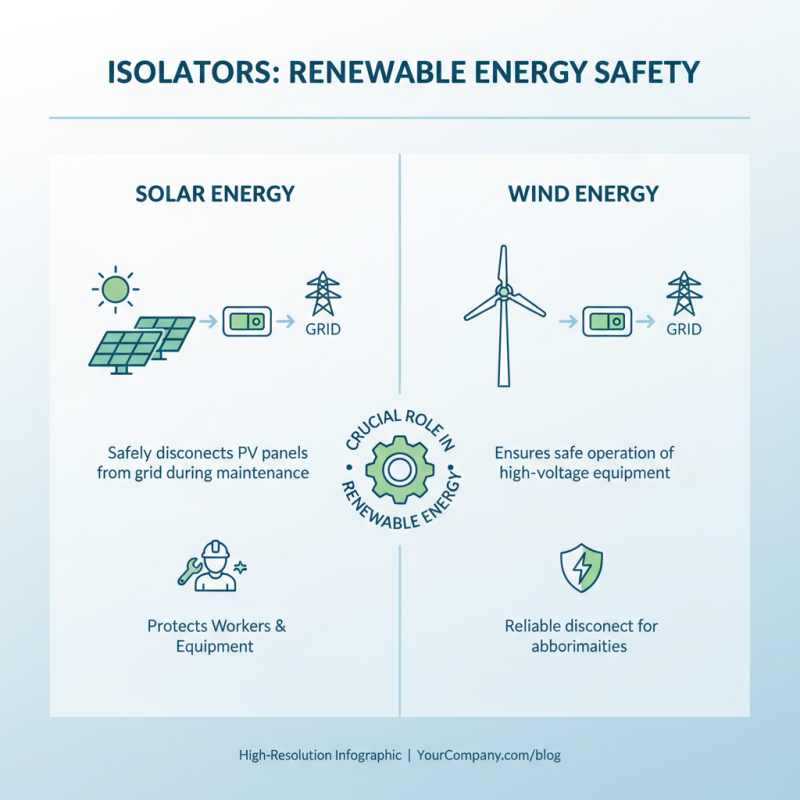
Isolators play a crucial role in renewable energy applications, particularly in solar and wind energy systems. These devices ensure the safe operation of high voltage equipment by providing a reliable disconnect in case of abnormalities. In solar power plants, isolators are used to separate photovoltaic panels from the grid during maintenance. This protects both workers and equipment.
In wind power installations, isolators serve a similar purpose. They help isolate the turbine’s electrical components from the grid. According to data from the International Renewable Energy Agency (IRENA), the global renewable energy capacity reached over 2,800 GW in 2021. As this capacity expands, isolators become increasingly vital in maintaining system integrity and safety.
**Tip 1:** Always check the voltage rating of isolators used in your energy systems. Using an inappropriate rating can lead to dangerous situations.
**Tip 2:** Regular maintenance of isolators is essential. Neglect can result in malfunction, risking entire systems.
Despite their importance, many installations overlook isolator quality and compliance with standards. This can lead to unexpected failures. A systematic review of isolators in renewable setups can enhance safety and efficiency.
Role of Isolators in Electrical Substations and Grid Protection
Isolators play a crucial role in electrical substations and grid protection. They enable the safe disconnection of equipment, ensuring maintenance crews can work without risk. Without these devices, safety would be compromised. In high voltage systems, isolators help prevent electrical accidents that could lead to outages or worse.
Their importance is evident during outages. Isolators allow parts of the grid to be de-energized. This isolation protects technicians from live wires. However, not all isolators function flawlessly. Sometimes, they may fail due to wear or environmental conditions. Regular inspections are vital to ensure reliability. A malfunction could put lives at risk.
Moreover, isolators contribute to system stability. They help manage load fluctuations in the grid. But designing these systems is complex. Engineers must consider various factors, including weather and system demands. Any oversight can lead to issues. Thus, ongoing evaluation and improvement are necessary to maintain safety and performance.
Top 10 Isolator High Voltage Applications You Should Know
| Application |
Voltage Rating (kV) |
Role/Function |
Key Features |
| Overhead Transmission Lines |
110 - 765 |
Disconnection for maintenance |
Robust, weather-resistant |
| Substation Isolation |
66 - 400 |
Ensures safety during repairs |
High reliability |
| Cable Termination |
36 - 138 |
Connectivity and protection |
Compact design |
| Renewable Energy Systems |
33 - 1000 |
Grid connection and isolation |
Advanced technology |
| Industrial Applications |
10 - 33 |
Safety in manufacturing processes |
Durable materials |
| Railway Electrification |
1.5 - 25 |
Supply and control of power |
Lightweight and efficient |
| Power Distribution Networks |
11 - 132 |
Protection and isolation |
Versatile configurations |
| Smart Grid Technologies |
More than 110 |
Real-time monitoring |
Integrated communications |
| Offshore Wind Farms |
33 - 150 |
Isolation from grid fluctuations |
Corrosion-resistant |
| Microgrid Systems |
24 - 480 |
Autonomous energy management |
Flexible controls |
High Voltage Isolator Types: Their Features and Selection Criteria
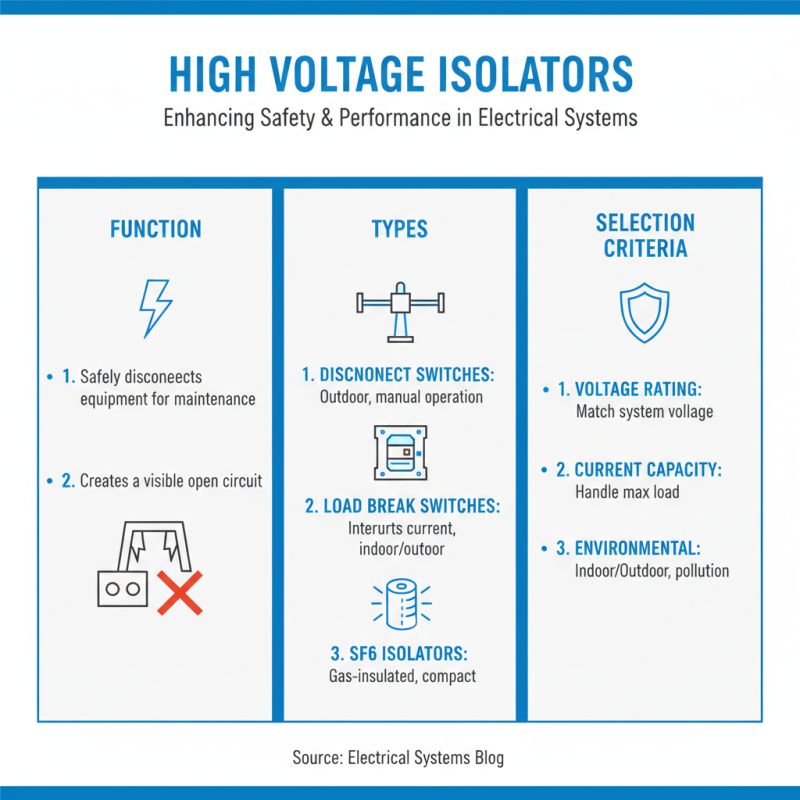
High voltage isolators are crucial in managing electrical systems. They enhance safety and performance in various applications. Understanding the types of isolators and their features is vital for effective selection.
There are different isolator types like air, oil, and gas-insulated systems. Each has distinct characteristics. Air-insulated isolators are common due to their simplicity and reliability. However, they require larger space. On the other hand, gas-insulated systems save space but are often more expensive. Various industry reports indicate that gas-insulated technology will dominate by 2025, with a projected market growth of over 7% annually.
When choosing an isolator, consider environmental factors. These include humidity and temperature extremes. These factors can significantly affect an isolator's performance. A poor selection can lead to failures or increased downtime. Many engineers overlook these details, which can impact operational efficiency. A comprehensive assessment of conditions is essential to avoid future problems.
Safety Standards and Regulations Governing High Voltage Isolator Use
High voltage isolators play a crucial role in electrical systems. They ensure safety and reliability in various applications. However, usage of these devices must comply with safety standards. Organizations worldwide outline specific regulations to minimize risks. The International Electrotechnical Commission (IEC) provides guidelines for isolator design and testing.
Local regulations may also impose stricter conditions. These rules often address installation, maintenance, and operational procedures. They aim to protect both workers and equipment. Ensuring high voltage isolators meet these standards is essential. Neglecting this can lead to severe accidents. For instance, improper installation may cause electrical failures or fires.
It's concerning that many installations overlook these guidelines. Updates in technology and safety practices continuously evolve. Some professionals may not be aware of the latest regulations. This gap in knowledge can lead to risky situations. A thorough understanding of applicable standards is vital for safety. Regular training and audits help reinforce compliance among teams.
Top 10 High Voltage Isolator Applications