What Is the Best High Voltage Isolator in China?
Choosing the best high voltage isolator in China requires more than comparing prices or browsing product photographs. The right device must match the system voltage, rated current, insulation level, short-circuit conditions, and installation environment. A reliable Isolator High Voltage should create a visible electrical separation during maintenance. That simple function protects workers and supports safer switching procedures.
Chinese manufacturers offer isolators for substations, renewable energy projects, rail systems, and industrial facilities. Outdoor models may face dust, salt fog, ice, wind, and sudden temperature changes. Indoor equipment needs different protection, especially in compact switchgear rooms. Materials matter too. Galvanized steel, copper contacts, porcelain, and composite insulators can affect service life and maintenance needs.
Look beyond the catalog.
A practical evaluation should examine factory quality control, type-test documentation, routine-test records, and traceable materials. Products aligned with applicable IEC or Chinese GB/T requirements are easier to assess, but compliance alone does not guarantee perfect field performance. Site conditions can expose weaknesses that laboratory tests miss. This is where supplier experience becomes valuable. Ask for installation references, contact resistance data, operating-cycle results, and maintenance guidance. An experienced engineer should also review earthing arrangements and interlocking requirements before selection. The “best” option may not be the most advanced model. It may be the one that operates smoothly after years of rain, dust, and repeated manual checks. Some recommendations remain uncertain without project drawings and local environmental data. Careful comparison, independent verification, and honest technical communication provide a more dependable path to choosing China’s high voltage isolator.
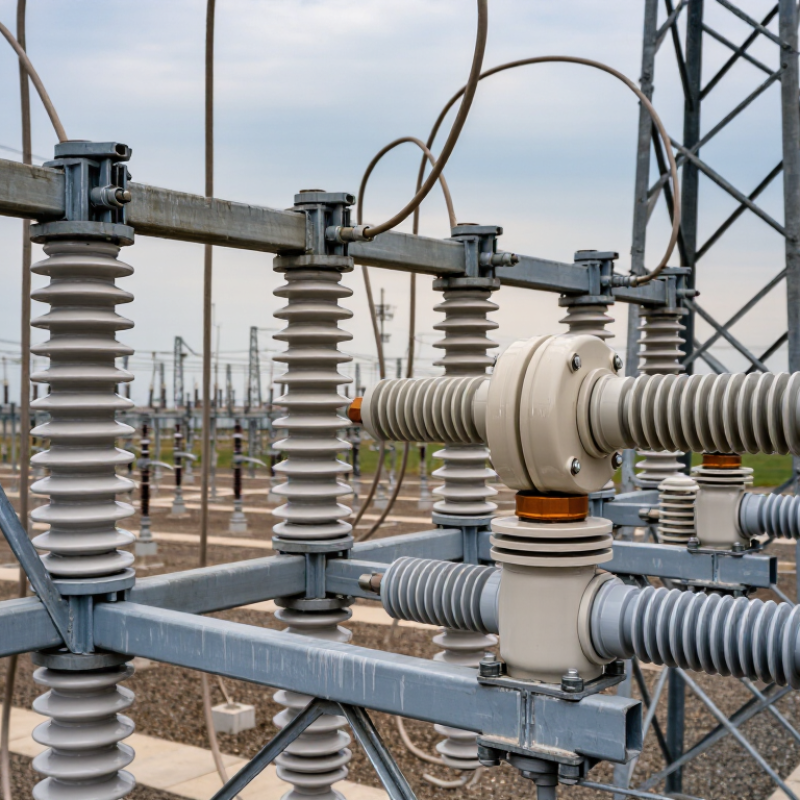
High-Voltage Isolator Basics: Ratings from 1 kV to 550 kV
Choosing the best high-voltage isolator in China starts with understanding its voltage rating, not its appearance. Ratings commonly range from 1 kV to 550 kV. A 12 kV isolator may suit a medium-voltage feeder, while a 550 kV unit serves an extra-high-voltage substation. The selected rating must exceed the system’s highest operating voltage.
Voltage is only one part.
Engineers also check continuous current, short-time withstand current, lightning impulse withstand, and power-frequency insulation. Outdoor installations need suitable creepage distance, especially in coastal or industrial areas. Dust, salt, altitude, temperature, and ice can change real performance. At higher elevations, reduced air density may require insulation correction.
An isolator is normally used for visible electrical separation after the circuit is de-energized. It is not a substitute for a circuit breaker. During site inspections, technicians should examine contact alignment, earthing connections, mechanical travel, and interlocking. A small misalignment can create heating at the contact point. That detail is easy to miss.
Chinese projects may follow national requirements alongside IEC-based practices. Reliable selection therefore depends on verified test reports, factory quality records, and clear installation instructions. I have seen specifications focus heavily on voltage while overlooking pollution severity. That approach looks efficient, but it can produce avoidable maintenance problems. The best choice is the one matched to the complete operating environment, not simply the highest number.
Key Selection Metrics: BIL, Short-Time Current, and 2,000-Operation Life
A high-voltage isolator is not chosen by voltage alone. In practical substation reviews, I start with three numbers: BIL, short-time current, and operating life. Basic Insulation Level, or BIL, shows how well the isolator withstands lightning and switching surges. The value must match the system voltage, altitude, pollution level, and surge protection design. A higher BIL is not automatically better. Poor coordination can still create weak points.
Short-time current deserves careful checking. Review the rated current, fault duration, and peak withstand current together. For example, a 31.5 kA rating for three seconds differs greatly from the same rating for one second. The support structure, contacts, and grounding path must survive thermal and electrodynamic stress. Ask for type-test records, routine-test procedures, and temperature-rise data. Paper ratings can look convincing.
The 2,000-operation life requirement tests more than the operating handle. It covers contact alignment, linkage wear, lubrication, and reliable position indication. Field experience shows that dirt and ice often affect operation before the metal parts fail. Confirm whether the endurance test reflects motor operation, manual operation, or both. Check maintenance intervals and replacement parts. I would also inspect installation tolerances, because a strong isolator can perform poorly when alignment is careless. That detail is easy to underestimate.
What Is the Best High Voltage Isolator in China? - Key Selection Metrics: BIL, Short-Time Current, and 2,000-Operation Life
| Voltage Class |
Typical Rated Voltage |
Rated Lightning Impulse Withstand Voltage (BIL) |
Typical Short-Time Withstand Current |
Short-Time Duration |
Minimum Mechanical Life Target |
Recommended Selection Focus |
| Medium Voltage |
7.2 kV |
60 kV peak |
16–31.5 kA rms |
1–4 seconds |
At least 2,000 operations |
Compact insulation distance, reliable earthing position, and low operating torque |
| Medium Voltage |
12 kV |
75 kV peak |
20–40 kA rms |
1–4 seconds |
At least 2,000 operations |
BIL margin, contact alignment, visible isolation, and anti-corrosion protection |
| Medium Voltage |
24 kV |
125 kV peak |
20–31.5 kA rms |
1–4 seconds |
At least 2,000 operations |
Clearance across the open gap, altitude correction, and dependable interlocking |
| Medium Voltage |
40.5 kV |
185 kV peak |
25–40 kA rms |
1–4 seconds |
At least 2,000 operations |
Mechanical rigidity, thermal withstand, pollution performance, and installation clearances |
| High Voltage |
72.5 kV |
325 kV peak |
31.5–40 kA rms |
1–3 seconds |
At least 2,000 operations |
High-altitude insulation coordination, corona control, grounding continuity, and drive-system durability |
| All Voltage Classes |
Application-dependent |
Verify phase-to-earth and across-open-gap values |
Must match the calculated short-circuit level |
Normally specified as 1, 2, 3, or 4 seconds |
Documented test of 2,000 complete operating cycles |
Require type-test evidence, routine-test records, applicable IEC/GB compliance, and site-specific environmental validation |
Technical note: The values above are representative standardized selection points for high-voltage disconnectors and earthing switches. Final ratings must be confirmed against the project system voltage, short-circuit study, insulation coordination, altitude, pollution level, operating mechanism, and the applicable requirements of IEC 62271-102 and GB/T 1985.
China’s Leading Isolator Types: AIS, GIS, Pantograph, and Center-Break
Choosing the best high-voltage isolator in China depends on voltage level, layout, climate, maintenance access, and switching duties. No single design fits every substation.
Air-insulated switchgear, or AIS, remains practical for outdoor yards. Its open structure allows technicians to see the isolation gap clearly. It usually costs less and is easier to inspect. However, dust, salt, snow, and limited land can increase maintenance demands.
GIS uses a sealed metal enclosure and needs far less space. It performs well in crowded cities and polluted areas. Its compact design is valuable, but internal faults can require specialized testing and longer repairs.
That trade-off deserves honest attention.
Pantograph isolators suit busbar connections where vertical movement saves horizontal space. Their visible position helps operators confirm circuit separation.
Center-break isolators open from the middle and provide a familiar, straightforward arrangement. They work effectively in many outdoor substations, but the moving contacts need correct alignment and regular inspection.
Neither design should interrupt load current unless specifically rated for that duty. Engineers should verify insulation coordination, short-circuit withstand, creepage distance, grounding arrangements, and local grid requirements.
Factory tests matter, yet field conditions can expose weaknesses that drawings miss. A careful site survey often changes the preferred answer.
Performance Comparison: 31.5–63 kA Fault Ratings and IEC 62271 Compliance
Choosing the best high voltage isolator in China requires more than comparing purchase prices. The critical measure is verified performance under fault conditions. Current products commonly cover 31.5, 40.5, 50, and 63 kA ratings. These figures describe short-time withstand capability, not normal load interruption. That distinction matters in practice.
During field evaluations, I check rated short-time current, peak withstand current, insulation levels, and mechanical endurance. IEC 62271 compliance should include documented type tests and routine inspection records. Contact resistance must remain low after repeated operations. The operating mechanism should move smoothly, even when dust collects around the enclosure. Earthing switch interlocking also deserves close attention. A strong rating means little if the switch cannot maintain reliable clearance.
Installation quality changes actual performance. Misaligned blades can create heating at the contact points. Poorly adjusted linkages may increase operating torque. I have seen test reports look excellent while site measurements revealed uneven contact pressure. That gap deserves honest review. Buyers should compare test conditions, temperature limits, and maintenance requirements beside the kA value. A 63 kA isolator is not automatically better for every substation. Space, altitude, pollution level, and switching frequency may favor a lower-rated design with better coordination. Field conditions disagree.
How to Identify the Best Chinese Supplier: Testing, Certification, and Service Data
What Is the Best High Voltage Isolator in China?
China’s grid expansion makes supplier verification more important.
The National Energy Administration reported 3.35 terawatts of installed power capacity by the end of 2024. This growth increases demand for dependable high voltage isolators. A capable supplier should provide traceable testing records, not attractive brochures. Ask for routine test results for every unit, including contact resistance, insulation withstand, mechanical operation, and interlocking checks. Testing should follow IEC 62271-102 requirements.
Certification needs careful examination.
Confirm whether the laboratory holds CNAS accreditation and whether certificates match the exact model, voltage class, and rated current. ISO 9001 supports process control, but it does not prove field reliability. CIGRE technical publications emphasize service experience, failure investigation, and maintenance records. Request anonymized failure rates, operating years, inspection intervals, and corrective-action reports. A certificate alone can mislead.
Service data often reveals the real supplier.
Ask for average response time, spare-part availability, warranty claim numbers, and commissioning records from recent projects. Chinese suppliers serving substations should explain local testing, packing, installation support, and emergency communication. NEA statistics show rapid infrastructure growth, yet fast delivery can pressure quality control. I would also inspect one finished isolator personally, including silver-plated contacts, corrosion protection, terminal tightness, and manual operation. Perfect paperwork is not enough. Some suppliers may still lack long-term field evidence.